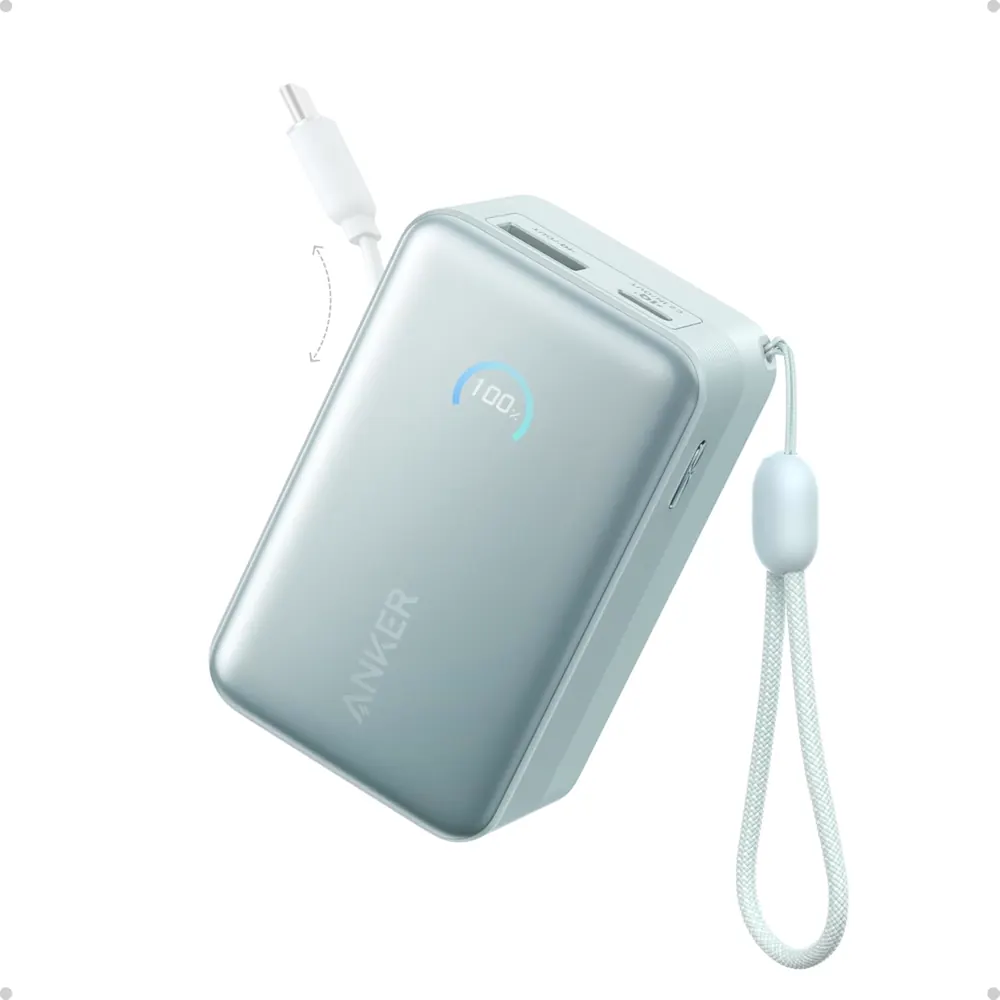
Power bank listings can turn into a soup of numbers: 10,000mAh, 20,000mAh, 30W, 45W, PD, USB-C, built-in cable, input, output, and pass-through charging. You do not need to memorize every spec. You just need to match the charger to your real use.
Start with capacity.
A 10,000mAh power bank is usually the sweet spot for phones, daily carry, events, and travel bags. It is easier to carry than a huge brick and still gives meaningful backup power. Bigger banks can be better for tablets, long trips, or laptop support, but they get heavier fast.
Look at output watts.
Watts tell you how fast the power bank can send power. For phones, many good chargers are already fast enough. For tablets and lightweight laptops, higher USB-C output matters more. A 45W bank is more flexible than a basic low-watt charger.
USB-C should be the default.
USB-C input and output keeps life simpler. If the bank can recharge through USB-C and charge your devices through USB-C, you need fewer cables.
Built-in cables are convenience, not magic.
A built-in cable is great for commuting, travel, and emergency charging because you cannot forget it. The tradeoff is that built-in cables are still physical parts, so treat them gently.
Check airline and bag use.
Most normal consumer power banks are fine for travel, but always check airline rules for large battery packs. Also think about shape. A slim bank can fit a pocket better than a chunky one with the same capacity.
Big Cyber Deals shortcut:
For most people, start with a 10,000mAh USB-C power bank with enough wattage for your main device. Pick built-in cable convenience if you hate carrying extra cords.
Gadgets
How to Choose a Power Bank Without Getting Lost in Specs
A simple guide to power bank capacity, watts, USB-C charging, built-in cables, and travel-friendly choices.